When to Wrap Brisket: Bark, Foil vs. Paper

The short answer: Wrap brisket when the bark is dark and set and the fat cap has started to render. Do not wrap just because the internal temperature reaches 165°F.
I normally wrap brisket between 175°F and 185°F in the flat. At that point, the bark should look dark and dry, the seasoning should stay in place when touched lightly, and the fat cap should feel soft and pillowy. If the surface still looks wet or the rub wipes off, keep cooking.
For the complete cook from trimming through resting, follow my Texas-style smoked brisket recipe.
Why Wrap a Brisket?
Wrapping is optional, but it gives you more control over the second half of the cook.
As moisture evaporates from the brisket, it cools the surface. That can cause the internal temperature to stall for several hours. Wrapping creates a more humid environment around the meat, reduces evaporation, and helps the brisket cook faster.
Wrapping can also protect bark that is already as dark as you want it. The tradeoff is that any full wrap will soften the bark to some degree, especially foil.
Wrapping can help with:
- Shortening the stall
- Keeping the surface from drying too much
- Protecting bark from getting darker or harder
- Making the finishing time more predictable
It does not guarantee a juicy brisket. Marbling, rendering, tenderness, and the final rest all matter.
When to Wrap Brisket
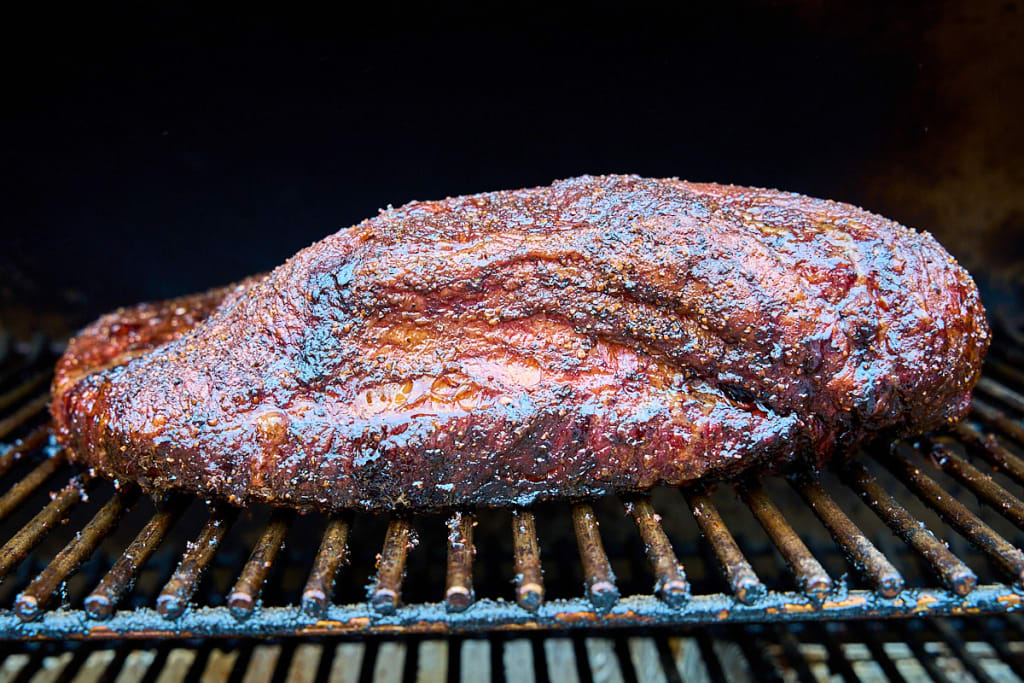
Start checking the brisket once it reaches the stall, but let the bark and fat cap make the final decision.
The Bark Is Dark and Set
The surface should have a deep color and look dry rather than wet or tacky. Lightly touch the bark with a gloved finger. The seasoning should stay in place instead of smearing or coming off.
The Fat Cap Feels Soft
The fat cap should feel soft and pillowy instead of firm and rubbery. This is one reason I do not automatically wrap at 165°F. I have not found the fat cap to be properly rendered that early.
The Temperature Is a Checkpoint
For my method, the bark and fat cues usually come together between 175°F and 185°F in the flat. Your brisket may be ready a little earlier or later depending on the cooker, airflow, humidity, brisket grade, trim, and cooking temperature.
Do not use probe tenderness to decide when to wrap. Probe feel is how you determine when the brisket is finished later in the cook.
Should You Wrap During the Stall?
You can, but you do not need to wrap as soon as the stall begins.
Wrapping earlier gets the brisket through the stall faster, but it also traps moisture before the bark and fat cap have finished developing. Waiting longer gives the bark more time to set.
If dinner is approaching and the brisket is behind schedule, wrapping earlier is a reasonable tradeoff. If your schedule has room, wait until the bark looks right.
Butcher Paper vs. Foil vs. Foil Boat
Butcher Paper
Food-grade, unwaxed butcher paper is my preferred full-wrap option.
Paper absorbs some fat and moisture while still allowing limited evaporation. The brisket cooks faster than it would without wrapping, but the bark generally stays firmer than it does in foil.
Use pink, peach, or white food-grade butcher paper. Do not use waxed paper, freezer paper, packing paper, or craft paper.
Aluminum Foil
Heavy-duty aluminum foil creates the tightest seal. It reduces evaporation more than paper and usually gives you the fastest finish.
The downside is steam. Foil can soften the bark and give the outside of the brisket a more braised texture. It is still a useful option when the brisket is running late or the flat needs more protection.
Foil Boat
A foil boat covers the bottom and sides of the brisket while leaving the top exposed.
This protects the bottom, catches rendered fat, and lets the top bark continue to develop. It is a useful middle ground when the bark needs more time but you want some of the protection and cook-speed benefits of wrapping.
No Wrap
You do not have to wrap brisket at all.
Leaving it unwrapped gives you the firmest bark and continued smoke exposure, but the cook will usually take longer. The flat also has more time to lose moisture from the surface, so temperature control and tenderness checks become even more important.
How to Wrap Brisket Without Damaging the Bark

Have the wrapping material ready before removing the brisket from the smoker. This keeps the process quick and limits heat loss.
- Lay out two overlapping sheets of food-grade butcher paper or a double layer of heavy-duty foil.
- Place the brisket in the center without dragging it across the wrap.
- Fold the material tightly around the brisket. Remove large air pockets, but do not scrape or crush the bark.
- Place the wrapped brisket seam-side down so its weight keeps the wrap closed.
- Return it to the smoker in the same orientation it was cooking. Keep the fat cap facing the stronger heat source.
- Reinsert the temperature probe into the thickest part of the flat.
You can lightly spritz butcher paper to make it easier to fold tightly. A small amount of beef tallow is also optional.
Skip the apple juice or beef broth if preserving bark is the main goal. Added liquid creates more steam and pushes the result closer to braising.
What Temperature Should You Use After Wrapping?
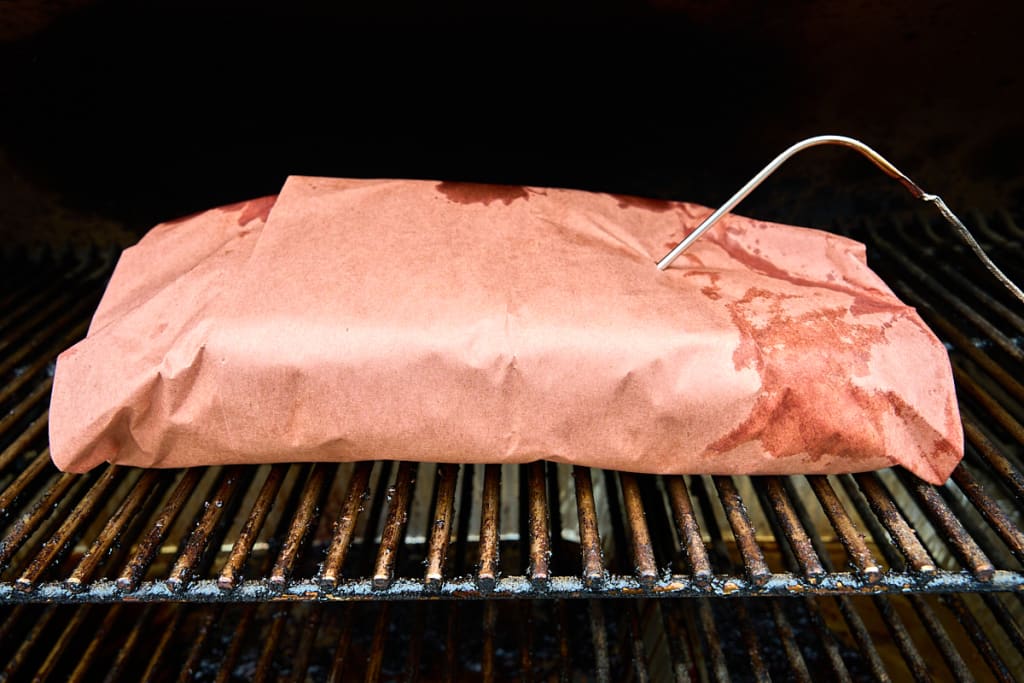
After wrapping, return the brisket to the smoker and finish at 250°F.
The wrap reduces evaporative cooling, so the temperature should begin climbing more steadily. Keep the probe in the flat, since it is leaner and more likely to overcook before the point.
Start checking for tenderness around 195°F. Most briskets finish somewhere around 200°F to 205°F, but the exact number varies.
The brisket is done when a probe slides into several areas of the flat with very little resistance. Temperature tells you when to start checking. Probe feel tells you when to pull it.
How to Firm Bark After Wrapping
Do not automatically unwrap the brisket for the final 30 to 60 minutes. That can dry out or overcook the flat.
If the bark feels softer than you want when the brisket is nearly done, remove the wrap and return the brisket to the smoker for about 10 to 15 minutes. Watch it closely and pull it once the bark firms up.
Resting and Holding the Brisket
Keep the brisket wrapped and let it rest for at least one hour before slicing. If it finishes early, hold it in an insulated cooler or a temperature-controlled warmer.
Longer hot holds can make serving easier and give the brisket more time to settle. I get my best results with an overnight hold in a food warmer at about 145°F.
Common Brisket Wrapping Problems
The Bark Turned Soggy
The brisket may have been wrapped before the bark set, the wrap may have been too loose, or too much liquid may have been added. Wait longer before wrapping next time. Use butcher paper instead of foil when bark is the priority.
The Bark Came Off With the Paper
The bark was probably still wet or tacky when wrapped, or the brisket was handled too roughly. Let the bark set fully and lift the brisket instead of sliding it across the paper.
The Wrapped Brisket Is Still Cooking Slowly
Check for loose folds, tears, or gaps in the wrap. A leaking package allows evaporation to continue and reduces the benefit of wrapping.
The Flat Finished Dry
Wrapping cannot rescue a brisket that cooks too far. Start checking the flat around 195°F and pull the brisket when it becomes probe tender. Do not wait for an exact finishing temperature if the flat is already tender.
Frequently Asked Questions
Should I wrap brisket at 165°F?
Not automatically. Check the bark and fat cap first. If the bark still looks wet or the fat feels firm, keep cooking. I normally wrap between 175°F and 185°F once the bark is set and the fat cap feels pillowy.
Is butcher paper or foil better for brisket?
Butcher paper is the better balance when you want to shorten the cook while keeping firmer bark. Foil cooks faster and provides more protection, but it traps more steam and softens the bark.
Do I need to add liquid when wrapping brisket?
No. Brisket releases moisture and rendered fat as it cooks. A little beef tallow is optional, but broth or juice is not necessary and can soften the bark.
Can I finish wrapped brisket in the oven?
Yes. Once the brisket is fully wrapped, direct smoke no longer reaches the surface. You can finish it in a 250°F oven and use the same temperature and probe-tenderness checks.
Can I smoke brisket without wrapping it?
Yes. No-wrap brisket usually takes longer but develops firmer bark. Give yourself extra time and watch the flat closely as it approaches tenderness.
Final Takeaway
Wrap brisket when the bark is set and the fat cap has started to render. For my method, that normally happens between 175°F and 185°F in the flat.
Use butcher paper for the best balance of bark and cook time. Use foil when finishing faster matters most. Try a foil boat when you want the top bark to keep developing, or skip the wrap when you have plenty of time.
Whatever method you choose, finish by probe feel and give the brisket enough time to rest.
For more ideas, browse my beef recipes, try this brisket-style smoked tri tip, or make a batch of brisket burnt ends.
